



How to Choose PCR Content Levels for Custom Cosmetic Tube Packaging?

当社はワンストップサービスのカスタマイズ化粧品パッケージ工場であり、化粧品チューブ、スクイーズチューブ、ABLチューブ、PBLチューブ、エアレスポンプチューブ、リップグロスチューブ、スキンケアチューブのカスタマイズにおいて20年以上の豊富な経験があります。 PCR(使用済みリサイクル材) チューブ など
Sustainable packaging is becoming an important consideration for beauty brands, but choosing recycled materials involves more than simply selecting a tube labeled eco-friendly. One of the most important decisions is determining the right percentage of post-consumer recycled (PCR) plastic in your packaging. Should you start with 10%, choose 30%, or aim for 50% or even 100% PCR content?
The answer depends on your product formulation, packaging appearance, mechanical performance, budget, and sustainability targets. For brands developing PCR Cosmetic Tubes, the goal is to reduce virgin plastic consumption while maintaining reliable packaging quality, consistent production, and a positive consumer experience.
As a customized cosmetic packaging manufacturer, Function Packaging provides PCR material options and customized tube solutions for skincare, personal care, and beauty brands. This guide explains how to evaluate PCR content levels and select a suitable recycled material ratio for your next packaging project.
What Is PCR Content in Cosmetic Tube Packaging?
PCR stands for Post-Consumer Recycled. It refers to plastic materials recovered after consumers have used and discarded products, which are then sorted, processed, and converted into recycled resin for manufacturing new products.
In cosmetic packaging, PCR plastic can be incorporated into tube bodies and other suitable packaging components, depending on the material structure and manufacturing process. Recycled polyethylene (PE) is one option for flexible squeeze tubes because PE is widely used in cosmetic tube extrusion.
PCR content percentage indicates the proportion of recycled material in a defined part of the packaging. For example, a tube body containing 30% PCR resin uses 30% recycled resin and 70% other resin in that specified material composition.
However, brands should clarify how the percentage is calculated. PCR content in the tube body is not necessarily the same as PCR content in the complete package, which may also include a shoulder, cap, and other components.
Function Packaging offers customizable PCR ratios ranging from 10% to 100%, subject to material selection and product requirements. This allows brands to evaluate different sustainability targets without applying one fixed formula to every packaging project.

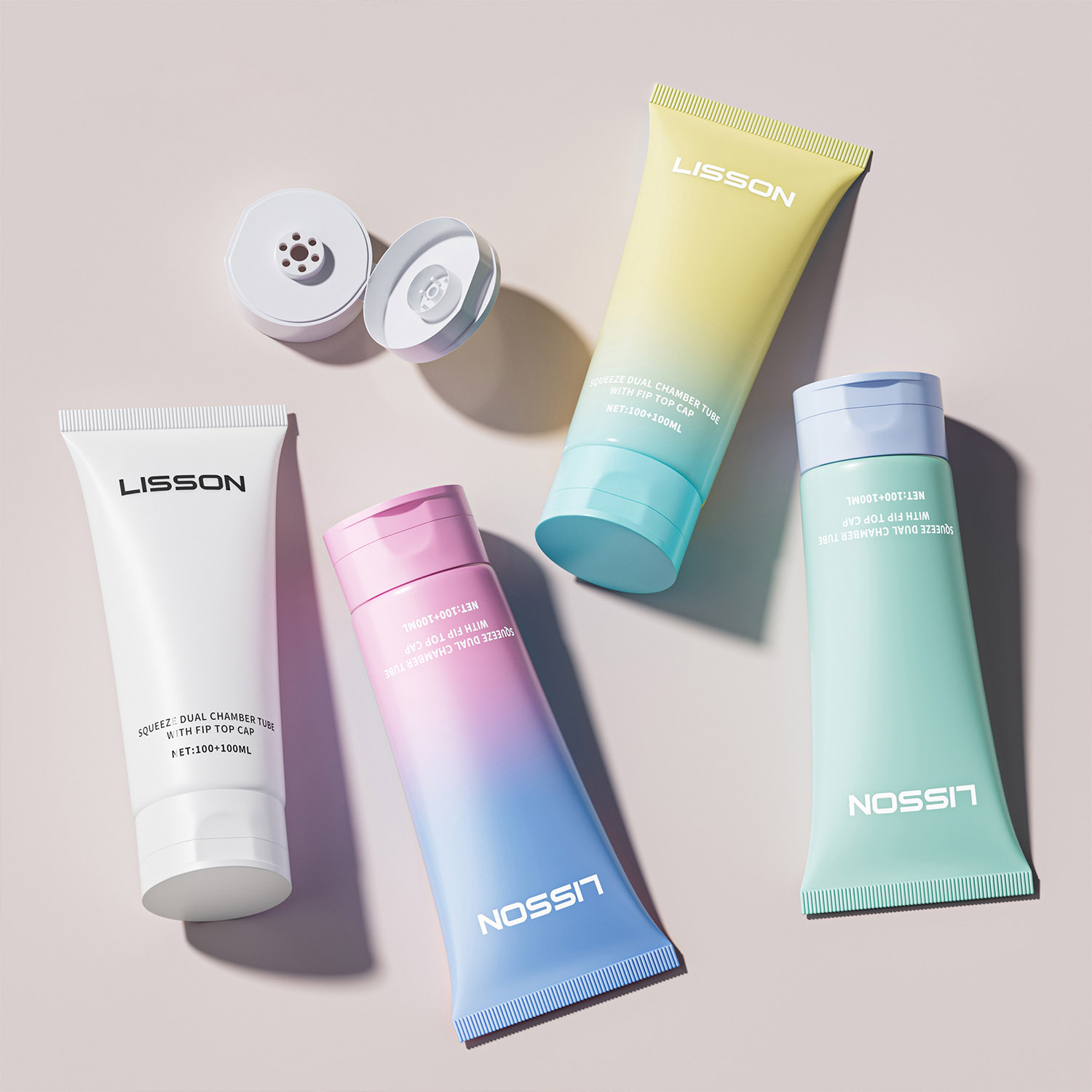
PCR cosmetic tube packaging with customized recycled material and flip-top closure.
How to Choose the Right PCR Content Level
There is no universal PCR percentage that works for every cosmetic tube. A suitable ratio should balance recycled content, processing stability, appearance, and the performance required by the finished package.
10%–20% PCR: A Practical Starting Point
A lower PCR ratio can be a practical starting point for brands introducing recycled materials into an existing packaging range. It allows the packaging team to evaluate material behavior, color consistency, printing results, and production compatibility before increasing the recycled content.
This option may suit brands that want to begin reducing virgin resin usage while maintaining familiar packaging specifications. Actual results depend on the PCR resin grade and the proportion used in each component.
30%–50% PCR: Balancing Sustainability and Performance
For many beauty brands, a 30%–50% PCR target offers a useful balance between recycled content and product development flexibility. It provides a measurable reduction in virgin resin use while leaving room to optimize the tube structure and processing conditions.
For example, Function Packaging offers a 120ml cosmetic tube made with 30% post-consumer recycled material. The product supports customized colors and decoration, with a PP cap and a minimum order quantity of 10,000 pieces.
This type of 30% PCR cosmetic tube can serve as a reference when developing facial cleanser, lotion, and other personal care packaging.
60%–100% PCR: Higher Recycled Content Targets
Higher PCR ratios can help brands pursue more ambitious recycled-content targets. However, increasing the recycled proportion may introduce additional challenges in color consistency, odor control, material flow, mechanical properties, and processing stability.
For light-colored, transparent, or premium cosmetic packaging, these factors deserve particular attention. Recycled resin should be evaluated for its actual suitability rather than selected based on percentage alone.
Before choosing a high-PCR formula, request material samples and conduct production trials. Check the finished tube's appearance, flexibility, sealing performance, and compatibility with the intended cosmetic formulation.
Key Factors That Affect PCR Content Selection
The recycled content percentage is only one part of the packaging decision. The following factors should be evaluated before confirming a custom tube specification.
Appearance and Color Consistency
PCR resin may show variations in color, clarity, and surface appearance compared with virgin resin. These differences can affect the final tube, especially when a brand requires pure white, pastel shades, transparent finishes, or precise Pantone color matching.
Discuss the expected color tolerance with your supplier and request finished samples before approving mass production. Opaque colors and carefully selected decoration methods may provide more flexibility for certain PCR packaging designs.
Mechanical Properties and Squeeze Performance
A cosmetic tube must withstand filling, sealing, transportation, storage, and repeated consumer use. Its flexibility, tensile behavior, sealing strength, and resistance to cracking should remain suitable for the intended application.
Different recycled resin grades may behave differently during extrusion and tube forming. Therefore, increasing PCR content should be accompanied by appropriate process adjustments and finished-package testing.
Formula Compatibility and Product Protection
The packaging material must be compatible with the actual cosmetic formula. Ingredients such as oils, surfactants, solvents, and active compounds may influence material selection.
For products with specific oxygen, moisture, or light protection requirements, the complete tube structure should be evaluated. PCR content alone does not determine the barrier performance of a cosmetic tube.
Production Cost and Supply Consistency
PCR resin pricing, availability, processing requirements, and quality control can vary by grade and supplier. Brands should compare the total packaging cost rather than assuming that a higher recycled percentage will always be more economical.
PCR Cosmetic Tubes vs. Recycled PE Tubes: What Is the Difference?
PCR cosmetic tubes and recycled PE tubes are closely related terms, but buyers should understand exactly what material is being used.
PCR describes the origin of the recycled material: plastic recovered after consumer use. PE describes the polymer type, polyethylene. Recycled PE therefore refers to polyethylene that has been recovered and reprocessed, while PCR PE specifically identifies post-consumer recycled polyethylene.
When sourcing recycled PE tubes, ask suppliers to clarify whether the recycled resin is post-consumer or post-industrial. These material sources are not interchangeable when calculating or communicating post-consumer recycled content.
You can explore eco-friendly cosmetic tubes and compare available PCR and other sustainable material options for your packaging project.

Customized PCR plastic tubes for beauty and personal care packaging.
How to Calculate PCR Content in Custom Cosmetic Tubes
A clear calculation method helps purchasing teams compare suppliers and communicate recycled-content claims accurately.
Basic calculation:
PCR Content (%) = (Weight of PCR Resin ÷ Total Resin Weight) × 100
For example, if the defined tube-body resin composition contains 3 grams of PCR resin and 7 grams of virgin resin, the PCR content of that resin composition is 30%.
This calculation should not automatically be presented as 30% PCR content for the entire finished package. If the cap, shoulder, and other components use different materials, their weights and recycled content must also be considered when calculating a whole-package percentage.
For accurate documentation, request a material declaration that identifies the recycled resin source, percentage, and components included in the calculation.
What Should Buyers Ask a PCR Cosmetic Tube Manufacturer?
Choosing a reliable supplier is just as important as selecting the right PCR ratio. Before placing a bulk order, cosmetic brands and packaging distributors should confirm the following details:
- What percentage of PCR material is available for the tube body and other components?
- Is the recycled resin post-consumer or post-industrial?
- Can the supplier provide material declarations and relevant supporting documentation?
- Can the tube meet the required color, printing, and surface finish specifications?
- Has the finished packaging been tested with the intended cosmetic formula?
- What are the MOQ, sampling lead time, and mass production lead time?
For example, Function Packaging's PCR tube customization service includes options for tube diameter, capacity, cap type, printing, logo, and color. Its product portfolio includes a 40mm diameter, 100ml PCR tube model with a listed MOQ of 10,000 pieces. Final specifications should be confirmed for each custom project.
For product specifications and customization details, visit custom PCR plastic tubes or contact the packaging team to discuss your requirements.
Frequently Asked Questions About PCR Cosmetic Tubes
Q1: What is a good PCR percentage for cosmetic tubes?
There is no single ideal percentage for every cosmetic tube. A 30% PCR ratio can be a practical starting point for brands balancing recycled content, appearance, and packaging performance. Higher ratios should be validated through material and production testing.
Q2: Can PCR plastic be used for skincare and personal care tubes?
Yes. PCR plastic can be used in suitable skincare and personal care tube applications. The final material selection should consider formula compatibility, mechanical properties, sealing performance, and the intended packaging structure.
Q3: Does a higher PCR percentage always mean better sustainability?
Not necessarily. A higher recycled content percentage reduces the amount of virgin resin used in the specified component, but overall environmental performance also depends on material sourcing, manufacturing, transportation, packaging design, and end-of-life recycling infrastructure.
Q4: Does PCR material affect cosmetic tube color and appearance?
It can. Recycled resin may have different color and clarity characteristics from virgin plastic. Brands should request samples and confirm color matching, opacity, printing, and decoration before mass production.
Q5: Can PCR cosmetic tubes be customized for private label brands?
Yes. Customization options may include tube diameter, filling capacity, cap design, color, logo, printing, and surface decoration. Available specifications and minimum order quantities depend on the selected product and manufacturing requirements.
Q6: What documents should buyers request when sourcing PCR tubes?
Buyers should request a material declaration identifying the PCR source and percentage, relevant resin specifications, and supporting test or compliance documents where applicable. These records help verify material claims and support internal packaging reviews.
Choosing the Right PCR Ratio for Your Next Packaging Project
Selecting PCR content is a balance between sustainability goals and real packaging requirements. A lower percentage may be suitable for an initial material transition, while 30%–50% PCR can provide a practical development target for many cosmetic brands. Higher recycled content is also possible, but it requires careful evaluation of material quality, appearance, production stability, and product compatibility.
The most effective approach is to define your target PCR percentage first, review the tube structure, test samples with the actual formula, and confirm the material documentation before approving mass production.
Looking for a reliable partner for custom sustainable packaging? Function Packaging provides customized PCR cosmetic tubes and other eco-friendly packaging solutions for global beauty brands, wholesalers, and OEM buyers. Contact our team to discuss your target PCR ratio, tube specifications, and bulk order requirements.