

伝言を残す
伝言を残す
化粧品パッケージのカスタマイズサービスを提供しております。ご要望をお聞かせください。できる限り迅速にご返信いたします!

How to Choose the Right Cosmetic Packaging: A Guide to 7 Core Product Categories

Aug 20 , 2026
編集者名

当社はワンストップサービスのカスタマイズ化粧品パッケージ工場であり、化粧品チューブ、スクイーズチューブ、ABLチューブ、PBLチューブ、エアレスポンプチューブ、リップグロスチューブ、スキンケアチューブのカスタマイズにおいて20年以上の豊富な経験があります。 PCR(使用済みリサイクル材) チューブ など

編集者名

Choosing the right primary and secondary packaging is one of the most critical decisions for any cosmetic brand. The container does far more than hold a liquid or cream; it protects active ingredients from light and air degradation, ensures precise dosage during daily use, and communicates brand quality directly to consumers on retail shelves.

At LISSON Packaging, we operate precision manufacturing facilities covering molding, tube extrusion, surface decoration, and custom tooling. Below is an engineering overview of our 7 core product categories, examining their manufacturing workflows, material properties, barrier performance, and ideal formulation applications.

1. Glass Bottles Packaging

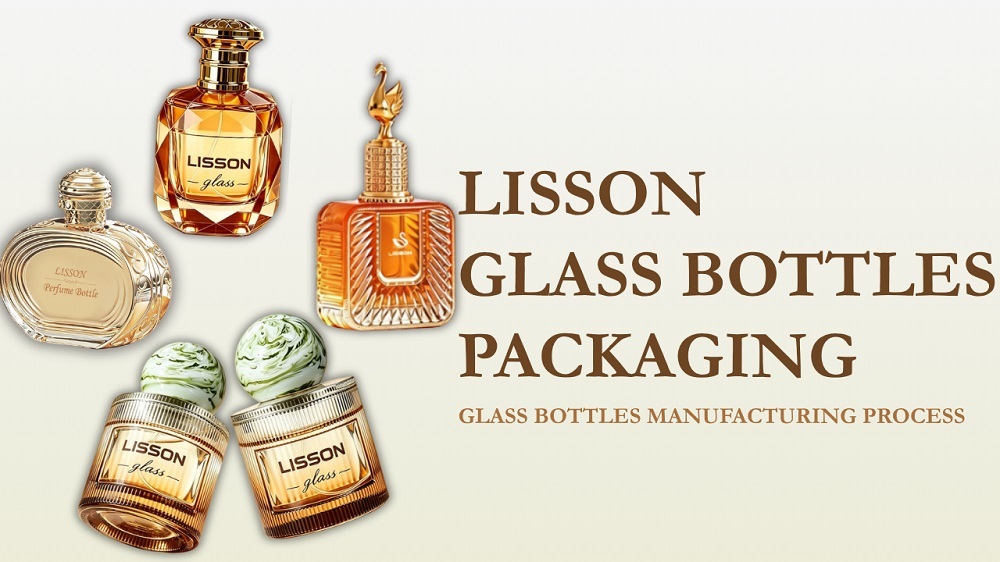
LISSON Glass Bottles Packaging Manufacturing Process

Glass remains the industry standard for prestige skincare, fine fragrances, and clinical formulations. Due to its non-porous structure and complete chemical inertness, high-purity glass creates a zero-reactivity environment. This makes it essential for housing delicate actives such as L-ascorbic acid (Vitamin C), retinoids, AHA/BHA chemical peels, and pure essential oil blends.

Manufacturing and Forming Process

Our automated production of Glass Bottles combines precision thermal molding with controlled stress relief:

  • Melting and Refining: High-grade silica sand, soda ash, and limestone are refined in continuous furnaces above 1500°C to eliminate micro-bubbles and ensure crystal-clear optical quality.
  • Automated IS Machine Forming: Using blow-and-blow forming for narrow perfume vials and press-and-blow forming for heavy-base serum bottles and cream jars, our Individual Section machines ensure consistent wall thickness and a solid bottom distribution.
  • Controlled Annealing Lehr: Molded glass passes through an extended cooling lehr to eliminate internal thermal stresses within the glass walls, greatly increasing drop resistance and thermal stability.
  • Neck Standardization: Precision tooling produces standardized FEA15 crimp tops for fine perfume atomizers, alongside continuous thread finishes for airtight dropper pipettes.

Recommended Applications

Luxury facial oils, concentrated anti-aging serums, liquid foundation cosmetics, clinical spot treatments, and prestige fine fragrances.

2. Aluminum Squeeze Tubes Packaging

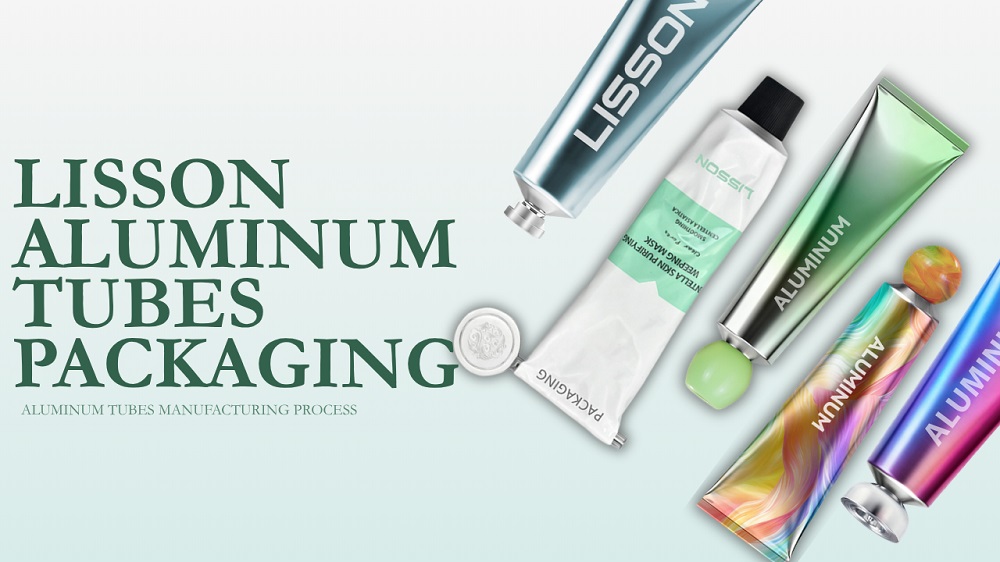
LISSON Aluminum Squeeze Tubes Packaging Manufacturing Process

Collapsible aluminum tubes provide total barrier protection for sensitive formulations. Unlike standard plastic tubes that suck outside air back into the chamber after squeezing, aluminum remains collapsed. This non-suck-back behavior prevents atmospheric oxygen and moisture ingress, making it the ideal container for preservative-free or oxidation-prone cosmetic creams.

Impact Extrusion and Passivation

Our manufacturing of Aluminum Tubes uses 99.7% pure aluminum slugs processed through continuous metallurgical stages:

  • Cold Impact Extrusion: High-tonnage punch presses strike the metal slug at high velocity, forcing the metal backwards over the punch tool to form the cylindrical tube shell and threaded nozzle in a single stroke.
  • Annealing: The extruded tube undergoes high-temperature thermal treatment to soften the metal crystal structure, giving the tube its smooth, collapsible softness without cracking.
  • Internal Epoxy-Phenolic Lacquering: Automated spray nozzles coat the inside of the tube with a food-grade epoxy-phenolic resin. Once baked in curing ovens, this neutral lining prevents acidic or alkaline formulas from reacting with the aluminum wall.
  • Base Enamel and Printing: Base enamel is applied to the exterior, by 4- to 6-color offset printing and protective varnishing.
  • Latex Seal Banding: An elastomeric latex ring is applied inside the base perimeter to guarantee a hermetic seal once the end is folded and crimped post-filling.

Recommended Applications

Pharmaceutical ointments, botanical hand balms, chemical peel treatments, professional hair colorants, and clean beauty skincare formulas.

3. Plastic Bottles Packaging

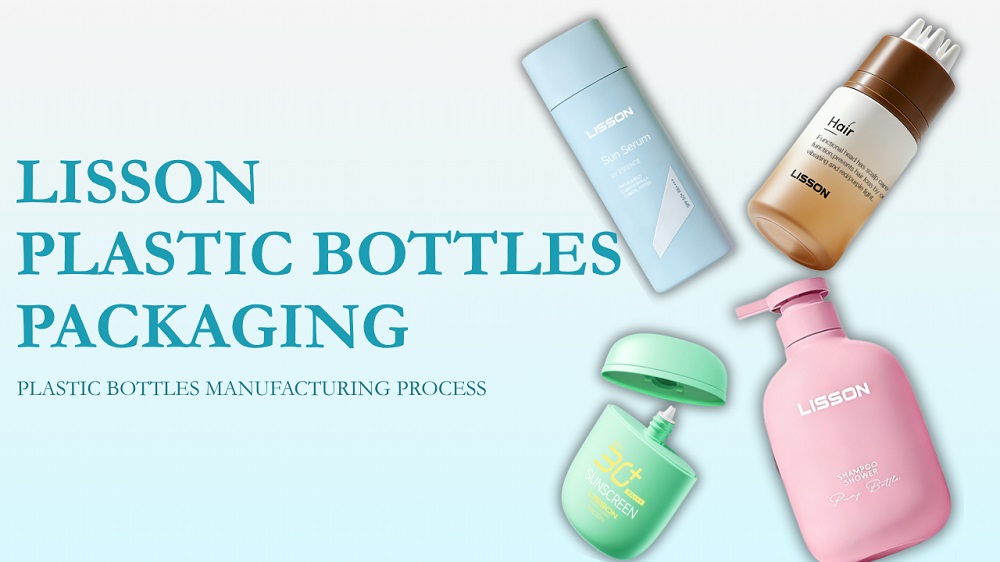
LISSON Plastic Bottles Packaging Manufacturing Process

Plastic bottles are the workhorse of daily personal care, shampoos, body washes, and sun care. They combine shatterproof durability with lightweight shipping economics and diverse ergonomic shapes that support multiple dispensing closures.

Molding and Dispenser Engineering

We produce a broad catalog of Cosmetic Bottles utilizing both virgin and post-consumer recycled (PCR) polymers:

  • Injection Stretch Blow Molding (ISBM): Primarily used for PET and PETG resins to produce crystal clarity, high impact strength, and accurate neck finishes that prevent cap leakage under pressurized air transit.
  • Extrusion Blow Molding (EBM): Used for HDPE and PP materials, enabling multi-layer co-extrusion for improved chemical resistance and unique shapes such as flat sunscreen flasks and curved lotion containers.
  • Functional Dispenser Matching: Our bottles integrate seamlessly with specialized lotion pumps, fine-mist atomizers, lockable foaming heads, and vibrating scalp massage applicators.
  • Surface Treatments: Full customization is available via soft-touch matte coating, silk-screen printing, hot foil stamping, and gradient spray finishes.

Recommended Applications

Clarifying toners, micellar cleansing waters, broad-spectrum sunscreen lotions, daily body cleansers, and scalp stimulating serums.

4. Monobloc Aluminum Bottles Packaging

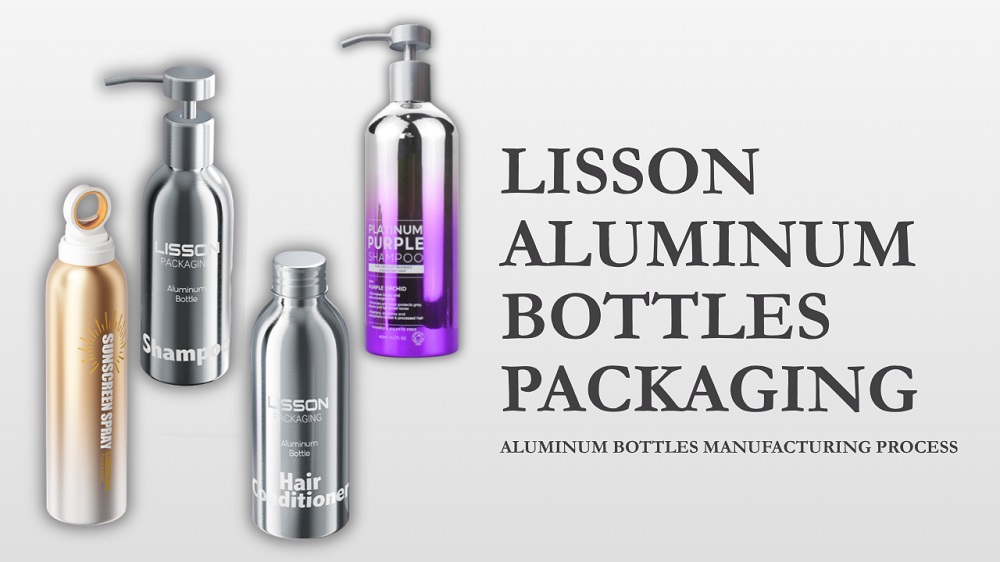
LISSON Aluminum Bottles Packaging Manufacturing Process

Monobloc aluminum bottles combine modern metallic aesthetics with 100% circular recyclability. Widely selected by professional salon haircare brands, setting spray lines, and aerosol products, these containers are rustproof in wet environments and offer complete light-blocking performance.

Monobloc Forming and Surface Finishing

Our manufacturing lines for Body and Hair Care Packaging incorporate seamless metal forming techniques:

  • Seamless Extrusion: Extruded from a single aluminum slug, creating a monobloc body with no welded seams or joints. This ensures structural strength capable of handling internal propellant pressures in aerosol applications.
  • Robotic Necking Dies: A multi-stage die sequence gradually shapes the shoulder and neck area to establish standardized screw threads (24/410, 28/410) or 1-inch crimp profiles for aerosol valves.
  • Internal Protective Linings: Formulated cross-linked polyamide or BPA-NI (BPA Non-Intent) resin linings are applied and oven-cured to resist aggressive surfactants and alcohol solvents.
  • Exterior Metal Decoration: Options include high-gloss anodizing, brushed metal textures, 360-degree offset printing, and tactile matte varnishes.

Recommended Applications

Salon-grade haircare, aerosol fixing sprays, dry shampoos, thermal spring mists, and luxury liquid soap dispensers.

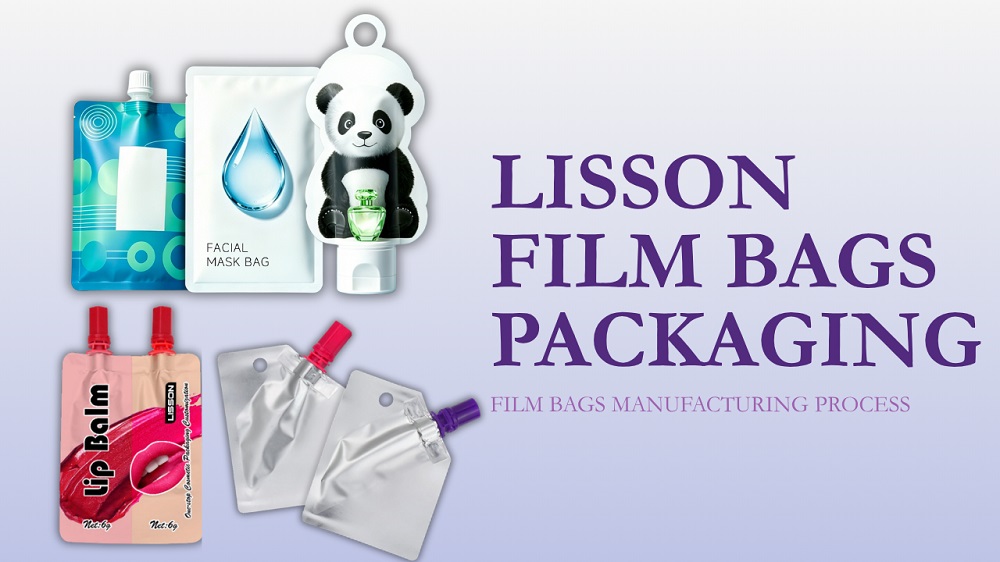
5. Flexible Film Bags and Spout Pouches

LISSON Film Bags Packaging Manufacturing Process

Flexible film packaging and spout pouches have grown rapidly as brands prioritize plastic reduction and refill-based business models. Compared to rigid bottles, flexible pouches require significantly less raw polymer to manufacture and take up minimal space during shipping and warehousing.

Multilayer Lamination and Converting

Our flexible pouch solutions support forward-looking product launches in our 2026 New Arrival collection:

  • High-Barrier Laminates: Multi-layer structures combining PET, VMPET, Aluminum Foil, Kraft paper, and LLDPE are bonded through solvent-free lamination, providing high tensile strength and puncture resistance.
  • Custom Die-Cut Profiles: Automated cutting equipment produces customized silhouettes, ergonomic contours, hang holes, and divided multi-chamber formats for targeted skincare regimens.
  • Spout Fitment Insertion: Ultrasonic and thermal welding securely mount rigid polyethylene (PE) or polypropylene (PP) spouts ranging from 8mm to 16mm, providing leak-proof pouring for refill systems.
  • High-Definition Rotogravure Printing: Up to 10-color printing capability allows photorealistic graphics, metallic highlights, and selective matte-gloss finishes.

Recommended Applications

Facial sheet mask packaging, liquid shampoo refill pouches, travel-sized lotion packets, single-dose peel solutions, and promotional sample sets.

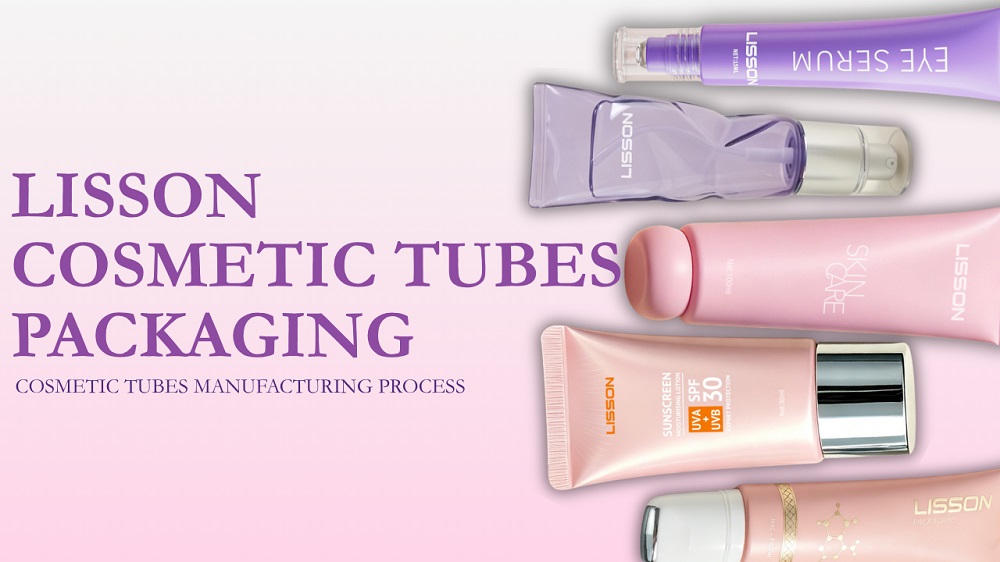
6. Squeeze Cosmetic Tubes Packaging

LISSON Cosmetic Tubes Packaging Manufacturing Process

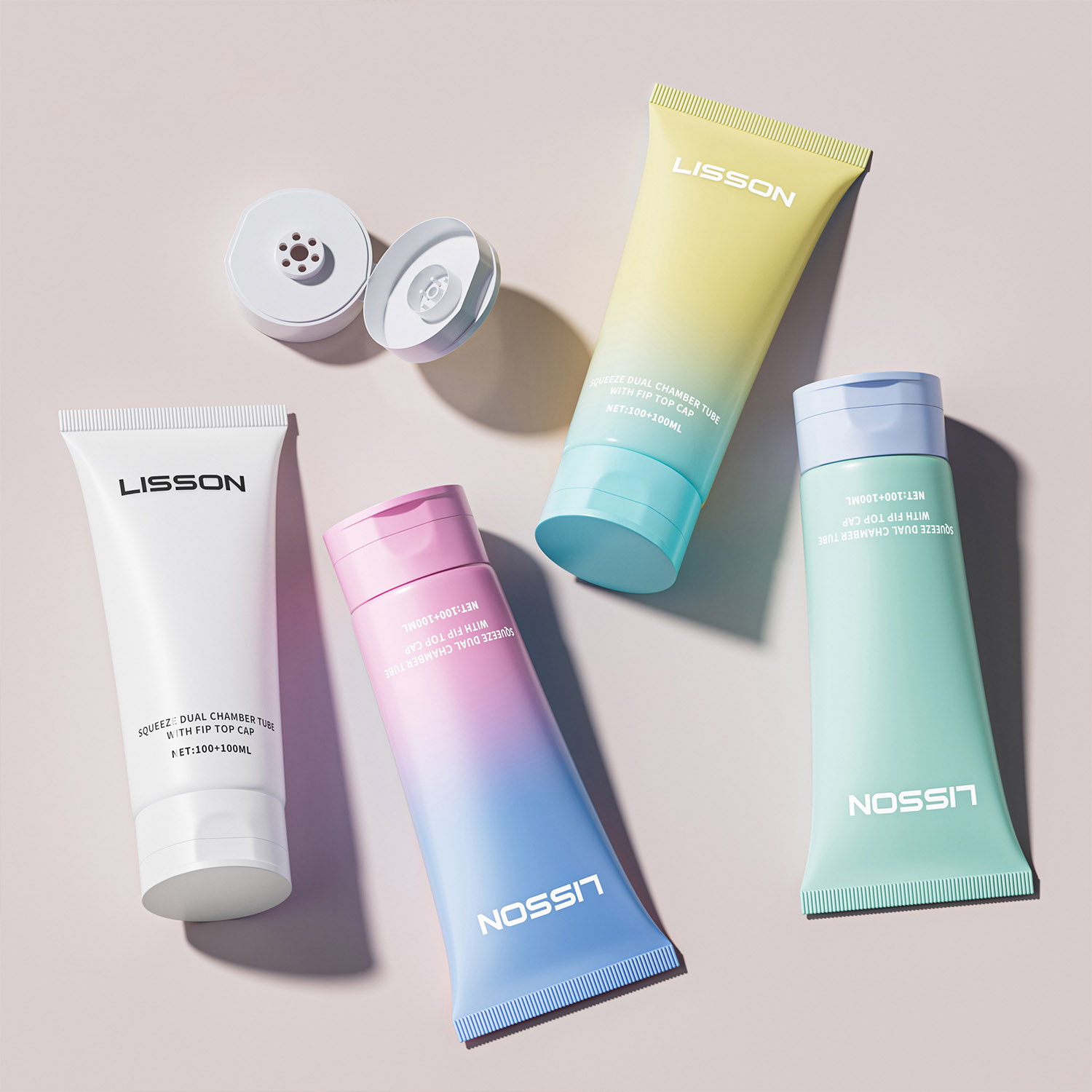
Cosmetic squeeze tubes are our primary specialty. They offer an ideal balance of ease of use, dosage control, and formula protection across skincare, body care, and color cosmetics. Modern tube engineering combines multi-layer barrier materials with specialized functional applicator tips.

Extrusion, Barrier Cores, and Applicators

We engineer high-performance Skin Care Tubes using both co-extruded and laminated structures:

  • Co-Extrusion (2-Layer and 5-Layer EVOH): Standard 2-layer tubes provide flexible dispensing for basic cleansers, while 5-layer co-extrusion incorporates an EVOH barrier layer to stop oxygen ingress and prevent active degradation in advanced skincare.
  • Laminated Tube Formats: Aluminum Barrier Laminates (ABL) deliver maximum barrier defense, whereas Plastic Barrier Laminates (PBL) support 360-degree continuous photographic printing without visible side seams.
  • Integrated Applicator Technology: Beyond standard orifices, tubes can be fitted with cooling Zamac zinc-alloy tips, ceramic globes, silicone facial brushes, or stainless steel micro-rollerballs to elevate the consumer application routine.
  • Sustainable Resin Options: Fully compatible with bio-based sugarcane polyethylene and Post-Consumer Recycled (PCR) materials from 10% to 100% concentrations.

Recommended Applications

Facial cleansers, eye firming serums, mineral sunscreens, BB/CC creams, exfoliants, and targeted massage creams.

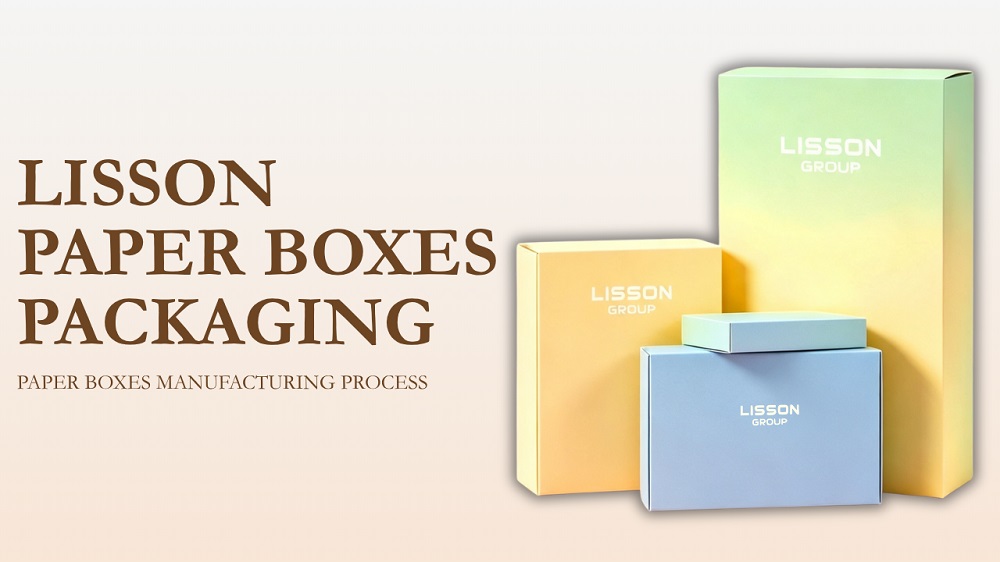
7. Paper Boxes Secondary Packaging

LISSON Paper Boxes Packaging Manufacturing Process

Secondary paper packaging serves as the initial tactile touchpoint during retail purchasing and e-commerce unboxing. Beyond protecting fragile primary containers during distribution, high-grade cartons communicate brand value and sustainability credentials directly to consumers.

Structural Fabrication and Print Finishing

Through our comprehensive Customization service, we engineer custom secondary packaging to exacting technical standards:

  • FSC-Certified Substrates: We work with virgin folding boxboard (FBB), white and brown kraft board, unbleached corrugated flute, and 100% recycled greyboard cores.
  • Automated Die-Cutting and Gluing: High-speed die-cutters and folding-gluing lines ensure accurate creasing, clean edges, and secure joints for folding cartons, magnetic closure boxes, and slide-out drawer boxes.
  • Protective Inserts: Precision-molded paper pulp trays, custom die-cut cardboard dividers, and EVA foam inserts hold primary glass bottles or squeeze tubes firmly in place during transit.
  • Surface Embellishment: High-resolution offset printing with soy inks, multi-level embossing and debossing, spot UV coating, soft-touch lamination, and precision hot foil stamping.

Recommended Applications

Perfume presentation boxes, skincare collection kits, retail shelf boxes for squeeze tubes and dropper bottles, and influencer PR mailer packaging.

Material and Packaging Performance Comparison

The table below summarizes key engineering and sustainability properties across our seven product categories to help you select the most suitable packaging format:

Packaging Category Barrier Protection Recyclability Profile Weight Profile Primary Advantage
Glass Bottles Total (Inert to gases & oils) 100% Infinitely Recyclable Heavy Prestige hand-feel and chemical neutrality
Aluminum Tubes Total (Air, UV, and Moisture) 100% Infinitely Recyclable Lightweight Collapsible with zero air suck-back
Plastic Bottles Medium to High (EVOH co-ex) PCR (PET, HDPE, PP) available Very Lightweight Shatterproof durability and shape variety
Aluminum Bottles Total (UV and Moisture) 100% Infinitely Recyclable Lightweight Seamless monobloc structure for salon & aerosols
Film Bags High (Foil multi-layer barrier) Mono-material PE/PP options Minimal Weight Reduces raw polymer usage and shipping volume
Cosmetic Tubes Medium to High (ABL/PBL/EVOH) Sugarcane PE and PCR options Very Lightweight Integrated massage tips and precise dosing
Paper Boxes Physical Drop & Light Protection 100% Biodegradable & Recyclable Flat-packable Brand storytelling and transit security

OEM/ODM Manufacturing and Quality Assurance Standards

Translating a packaging concept into mass production requires strict manufacturing controls. To ensure every batch runs smoothly on automated filling lines, our factory quality control protocols include:

  • Vacuum Leakage Testing: Containers and pump assemblies undergo rigorous vacuum chamber testing to guarantee seal integrity under pressure variations during air and sea transport.
  • Formula Stability and Baking Tests: Primary containers undergo accelerated compatibility testing (45°C–50°C for 12 weeks) with client bulk formulas to verify that no swelling, migration, or internal coating delamination occurs.
  • Torque and Drop Testing: Automated torque meters check cap application and removal resistance, while standardized drop tests confirm that bottles, boxes, and closures withstand retail distribution impacts.

Frequently Asked Questions About Cosmetic Packaging Sourcing

How do you prevent formula reactions with aluminum tubes and bottles?

For all aluminum packaging, we apply an automated internal spray of food-grade epoxy-phenolic or BPA-NI (BPA Non-Intent) resin lacquer. Once cured in high-temperature ovens, this cross-linked protective barrier completely isolates acidic, alkaline, or surfactant-heavy formulas from the metal wall.

What sustainable packaging materials are readily available for production?

We provide multiple verified sustainable options, including Post-Consumer Recycled plastics (10% to 100% PCR HDPE, PET, and PP), bio-based sugarcane polyethylene, 100% recyclable aluminum tubes and bottles, mono-material recyclable flexible pouches, and FSC-certified paperboard secondary packaging.

What is the typical lead time for custom tooling and bulk manufacturing?

Custom mold development generally takes 20 to 28 working days, with T1 engineering samples provided within 7 days after mold completion. Following pre-production sample approval, bulk manufacturing lead time typically ranges between 25 and 35 working days depending on the complexity of surface decoration.

最新のブログ

伝言を残す

伝言を残す
化粧品パッケージのカスタマイズサービスを提供しております。ご要望をお聞かせください。できる限り迅速にご返信いたします!